Search! What You See

Sunday, April 24, 2011

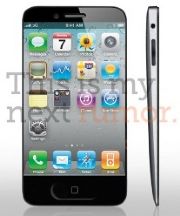
New iPhone 5 Mockup Is Ultra Sexy

Stay calm, it's only a mockup. But Apple's iPhone 5 will be either a thing of beauty or the ugliest phone in existence -- depending on your tastes -- should any element of a new but credible Photoshopped suggestion make it into the end product.
The image was created by former Engadget chief Joshua Topolsky based on a sketched design from one of his sources as well as credible rumors he's heard. Topolsky admits the sketch might be little more than one of many prototype designs, but what the hey--it's fun to speculate!
Rumors have already suggested a virtually bezel-free screen, for example, courtesy of glass bonding breakthroughs at Apple HQ. Topolsky claims this allows for a slightly larger screen area of 3.7 inches -- 0.2 inches larger than the iPhone 4, but still retaining the ultra high-resolution Retina Display of over 300 pixels per inch.
It's even suggested that, somehow, the microphone and speaker might be behind the glass, although this isn't shown in the mockup. Apple has made much of how it carves MacBooks out of solid aluminum using lasers, including making microscopic holes for microphones and for power lights to shine through. It's possible the same techniques might have evolved so they can be used on glass, allowing sound to pass through.
In profile, Topolsky's iPhone 5 has a teardrop shape, rather like the MacBook Air, tapering towards the bottom, although Topolsky says this might not be as extreme as his mockup suggests, due to his lack of Photoshop skills.
One big change is the home button, which is expanded to become a "gesture area." How this works isn't clear, and in Topolsky's mockup the home button area is wide but not tall, indicating only side-to-side swipe gestures are possible. It's possible this is a labor-saving trick so users can simply swipe to activate the phone, rather than hit the home button first, and then swipe across the screen.
Although not featured in the mockup, the sketch Topolsky saw also showed induction-based power, which is to say, wire-free battery charging. This is already possible using third-party products so it isn't a leap of imagination, and there's been long-term rumors of Apple being interested in such technologies
The sketch also showed what Topolsky calls a "swipe area," which he suggests could be a near field communication (NFC) area. It's been rumored that NFC will be coming to the iPhone 5, although it would be strange of Apple to draw attention to a small area of the phone for NFC purposes. NFC payments are designed around the idea of simply tapping any part of a device against a receiver.
Creating rumors and even mockups is a crime with no consequences. Nobody's going to chide Topolsky when the iPhone 5 arrives and his mockups turn out to be bunkum. In fact, many Apple-watchers suggest that the iPhone 5 won't look much different from the iPhone 4. However, there's little doubt that Topolsky's sexy imagery pours petrol onto the flames of the iPhone 5 hype machine.

Thursday, March 17, 2011

Coca-Cola Camera

Coca-Cola Camera ($60) 

Although the Real Thing may rot your teeth and make you fat, this fructose-free fake can wreck your career. A video camera tucked inside a Coke can, it records your not-for-prime-time moments in 352-by-288-pixel resolution at 25 frames per second. And with 4GB of memory, a rechargeable battery, and up to 15 hours of continuous recording time, this aluminum-clad snoop is nothing to burp at.

Covert Cameras Designed to Spy on You

Sneaky Cams

What do calculators, cola cans, vacuum cleaners, houseplants, and neckties all have in common? Each might hide a miniature video camera that’s watching and recording your every move. These sneaky spy cameras are inexpensive and easy to buy online, too. We’ve compiled a gallery of covert cameras commercially available for spies, wannabe gumshoes, and (probably) creeps.

Covert Plant Camera 

Beware the potted fern--it may be a government plant. Nothing brightens up an office or a home more than a spot of greenery, but this undercover weed has darker intentions. Equipped with a wired or wireless, color or black-and-white spy cam, the Covert Plant Camera is well hidden and watches your every move. It doesn't capture audio, however, so feel free to speak openly in its presence.

Sunday, March 6, 2011

New Kinds of Superconductivity? Physicists Demonstrate Coveted 'Spin-Orbit Coupling' in Atomic Gases

 A new microscope invented by scientists at Howard Hughes Medical Institute's Janelia Farm Research Campus will let researchers use an exquisitely thin sheet of light -- similar to that used in supermarket bar-code scanners -- to peer inside single living cells, revealing the three-dimensional shapes of cellular landmarks in unprecedented detail. The microscopy technique images at high speed, so researchers can create dazzling movies that make biological processes, such as cell division, come alive.
The technique, called Bessel beam plane illumination microscopy, is described in a research article published online on March 4, 2011, in the journal Nature Methods.
A major goal of biologists is to understand the rules that control molecular processes inside a cell. If one is trying to learn the rules of a game, it is better to have a movie of people playing the game than it is to have still photos -- and the same is true for cells, says Janelia Farm group leader Eric Betzig. He has been inventing and improving microscopes for more than 30 years. Despite having seen huge advances in microscopy during that time, Betzig says the field is still hindered by the fact that many microscopy techniques require that cells be killed and fixed in position for imaging. There is only so much one can learn from studying dead cells -- the equivalent of still photos, he says.
Betzig wanted to create a microscope that would let researchers see the dynamic inner lives of living cells. The notion of studying live cells, stippled with fluorescently labeled proteins and other molecules, is not new. But live-cell techniques can be problematic because light produced by microscopes can damage the cell over time. Besides cell damage, light causes the fluorescent molecules --of which there are only so many -- to wink out over time. In other words, the longer you study the cell to uncover its properties, the more damage you do to the cell and the more likely you are to spend your "photon budget," Betzig says.
What's more, the light of a microscope exposes more of the sample than just the small portion that is in focus. Illuminating the out-of-focus regions produces blur, making small intracellular features appear as lengthened blobs rather than sharp dots. "The question was, is there a way of minimizing the amount of damage you're doing so that you can then study cells in a physiological manner while also studying them at high spatial and temporal resolution for a long time?" Betzig says.
Long before arriving at Janelia Farm in 2006, Betzig began thinking about ways to improve live-cell microscopy. He put those thoughts on hold while he focused on designing new microscopy techniques that would ultimately shatter the limits of spatial resolution (imposed by the laws of diffraction). Until recently, microscopes could see objects no smaller than 200 nanometers in size. Several years ago, Betzig and his Janelia Farm colleague Harald Hess invented photoactivated localization microscopy, PALM, which can produce images of objects only 10-20 nanometers in size.
PALM and most other microscopes -- even the ones college students use in their biology classes -- work by exposing the sample through one objective lens and then collecting the light that comes back through that same lens. That approach causes light to damage the sample and induces blur, making it difficult to observe live cells.
In 2008, Betzig began working on ways to overcome these challenges. One idea he had was to use plane illumination microscopy. First proposed about 100 years ago, plane illumination involves shining a sheet of light through the side of the sample rather than the top. To do that, microscopists use two different objective lenses that are perpendicular to one another. "Because you come from the side, plane illumination confines the excitation much closer to the part that's in focus," Betzig says.
Although other researchers, including Janelia Farm Fellow Philipp Keller, have used plane illumination to great effect to study multicellular organisms hundreds of microns in size, the light sheets were still too thick to work effectively for imaging within single cells only tens of microns in size. The main problem is that the wide swath of light used in plane illumination exposed more of the cell than Betzig's group wanted. This caused excessive blur and light toxicity. To circumvent this problem, his group used a Bessel beam, a special type of non-diffracting light beam studied by physicists in the late 1980s, and used today in applications including bar-code scanners in supermarkets. Sweeping the beam across the sample creates a thinner light sheet, his group found.
Bessel beams behave a bit strangely, though, and this is what has kept Betzig's postdoctoral researchers -- Thomas Planchon and Liang Gao -- busy over the past few years. Although they produce a very narrow light beam, Bessel beams also create somewhat weaker light that flanks the focal point, making the pattern of illumination look like a bull's eye. The extra light lobes are a hindrance because they excite too much of the sample. To compensate for this problem, Betzig's group used two tricks. The first is a concept called structured illumination, where instead of sweeping the beam continuously, they turned it on and off rapidly, like firing a machine gun. This creates a periodic grating of excitation that can be used to eliminate any out-of-focus blur. (Structured illumination, used by Janelia Farm Group Leader Mats Gustafsson, is also one way of achieving super-resolution.)
Another strategy Betzig's group used is two-photon microscopy, a method commonly used in neuroscience to visualize thick pieces of brain tissue. One of the advantages of two-photon microscopes is that very little fluorescence signal is generated from weakly exposed regions. Thus, when they applied two-photon methods, the background from the Bessel side lobes was eliminated, and all that remained was the light from the narrow central part of the Bessel beam.
They then set out to image as fast as possible. The Bessel beam sweeps quickly through the sample, allowing the group to take nearly 200 images/second and build three-dimensional stacks from hundreds of two-dimensional images in one to 10 seconds. As they had hoped, they found that they could take hundreds of such three-dimensional image sets without harming the cell, generating amazing movies of cellular processes such as mitosis, where chromosomes divide as one cell becomes two. "There's no other technique that comes close to imaging as long with such high spatial and temporal detail," Betzig says.
Last summer, as soon as they got their first live cell images, Betzig, Planchon and Gao packed up the new instrument in a rented sport utility vehicle and took it to the Woods Hole Marine Biological Laboratory in Massachusetts for a physiology course, where they worked with co-authors Jim and Cathy Galbraith from the National Institutes of Health. "We learned a lot about what works and what doesn't and ways to treat the cells in a way that maintains their physiological state while we're doing the imaging," he says. "Like every microscope, the instrumentation is only part of the puzzle. A lot of it is finding the right samples, and right preparation methods to make it work."
The new microscope is also exciting because it may be used in the future to improve super-resolution microscopy. PALM and other super-resolution techniques are limited to looking at thin, dead samples, and can be very damaging when looking at live ones. "That's what's really great about the Bessel -- we can confine that excitation and really start to think about applying super-resolution microscopy to study structure or dynamics in thicker cells," says Betzig. Even without super-resolution, Bessel beam plane illumination microscopy will be a powerful tool for cell biologists, Betzig says, since it noninvasively images the rapidly evolving three-dimensional complexity of cells.
Source: Daily science web
Wednesday, March 2, 2011

Android Apps to Grab and Pandora Radio for Android


One of the best things about Google's Android mobile OS is the vast collection of crafty developers constantly working away on new mobile applications for Android phones and tablets. In other words, Android is all about the software. And there's certainly no shortage of Android apps.
As such, navigating Google's Android Market can be intimidating for new or beginner users, to say the least. So we handpicked 15 free Android apps that every Google phone or tablet owner, whether you're a newbie or power-user, could benefit from installing.

Pandora Radio for Android 

A variety of cool, free Internet radio applications exist for the Android platform, but none offer the same quality music catalogue and customization options as the free Pandora for Android app. Pandora is easy to setup and use: Create and account, log in, simply pick an artist or band you like and the application creates a custom "station" based around that artist, with similar tunes, selected by other like-minded listeners.
Download it Here
https://market.android.com/details?id=com.pandora.android&feature=search_result

Wednesday, February 16, 2011

Ufone New Package: Uth package stylish offer

Ufone New Package: Uth package stylish offer
Stylish Offer!
An Offer SO STYLISH kay soch hai aapki!
  
Forget the blah and bring on the bling! Ufone Uth introduces its Stylish Offer! Are you interested in winning amazing prizes like designer tshirts, iPads, and the latest in mobile gadgets?! Wait no more and start making as many calls with your Uth number as physically possible… because every 6 calls you make in a day count as ONE entry into our awesome lucky draw.
  
You can be the brand new owner of:
Amazing designer tshirts (100 daily)
Apple® iPhone
Apple® iPad
BlackBerry® Torch™ 9800 smartphone
Nokia® N8
Android® handset
(Items 2-6 will be awarded at the end of the Lucky Draw)
The more calls you make the more entries you will get and the more chances to win one of the totally awesome prizes above! SO start calling everyone U know right now before your friends do!
If you’re not on the Uth Package, then go get your Ufone SIM today and dial *22# to get on it right now,because you can get so much here kay soch hai aapki!
Terms & Conditions:
  
Subscriber has to make at least 6 calls in a day to qualify for that day’s lucky draw
Subscriber has to be on Uth Package, Uth Non Stop Offer or Uth Full Time Mufta Offer to participate in the offer.
Daily Charges of Uth Package & Uth Non Stop Offer are Rs 1+tax/Day
Daily Charges of Uth Full Time Mufta Offer are Rs 1.99+tax/Day
SIM has to be in the name of subscriber in order to obtain the prize.
Prize will be made available to the subscriber at the nearest service center
Prize will be made available within 7 days of the lucky draw.
Lucky draw for 100 T Shirts will be done on daily basis for 30 days from the launch of the promotion.
Lucky draw for Grand Prize of iPhone, iPad, BlackBerry® Torch™ 9800 smartphone, Nokia N8 and Android mobile device will be done at the end of the promotion.
Subscriber will be called and informed to pick the prize from the nearest service center.
Terms and Conditions apply.
Using SIMS without proper documentation is a crime – PTA
19.5% FED on usage and 10% withholding tax at recharge or bill applies.

Ufone New Package: Ufone introduces Lady’s Package

Ufone New Package: Ufone introduces Lady’s Package

Mothers, sisters, wives, daughters, friends… they brighten every day of our lives. But all too often their roles in our lives and their efforts go unnoticed or under-appreciated. That’s why… we at Ufone want to thank our ladies and would like to give something that’s tailored especially for you… Ufone Lady’s Package.
  
Ladies, keeping your needs in mind, we have devised Ufone Lady’s Package. Now talk to your heart’s content because with Lady’s Package, as our special female customer, U can avail great deals on Call & SMS rates:

  Lady's Package:

Ufone + PTCL Numbers(Rs 2/hour)(10am to 5pm)

Ufone + PTCL Numbers(Rs 1.25/minute)(5pm to 10am)

All other networks(Rs 1.25/minute )(24 hours)

SMS (Ufone to Ufone)(50 Paisas)

SMS (Ufone to other networks)(Re 1 )
YES! There’s finally a package that suits you the best, with more to come. So now Sub Manain Gaay!
To convert to Lady’s Package simply dial *34#
Terms & Conditions:
Calls to Ufone and PTCL numbers will be charged at Rs.2+tax per hour
Daily subscription fee of 50 paisas+tax will be applicable
Calls made to free numbers and short codes are not included in hourly call rate
UAdvance of Rs. 20 will be offered against a service charge of Rs. 0.75 + tax
One recipe or beauty tip will be shared, once a week, free of cost
19.5% FED on usage and 10% withholding tax at recharge or bill applies
Terms and condition apply
Using SIMs without proper documentation is a crime – PTA